
Long-Term Replacement Threat of Quantum Computing to AI Chips: Timing and Path
Every major technology wave eventually faces the question of succession: what comes after it, and when? AI chips—GPUs, TPUs, custom accelerators—have defined the current era of machine intelligence by enabling massive parallel computation on classical hardware. Quantum computing, with its radically different model of information processing, is often cast as a long‑term replacement threat to these AI chips. The reality is more nuanced.

This article explores the timing and path of quantum computing’s potential to replace, complement, or transform AI chips. We will look at what “replacement” would actually mean, the technical and ecosystem milestones required, how timelines might play out, and why the most plausible future is one of hybridization rather than sudden displacement.
What would “replacement” of AI chips really mean?
Before discussing timing, it is important to clarify what “replacement” means in the context of quantum computing and AI chips. Today’s AI hardware—GPUs, ASIC accelerators, and FPGAs—is designed to execute linear algebra operations, dataflow graphs, and other classical computations efficiently. Quantum hardware, by contrast, manipulates qubits through unitary operations and measurements, exploiting phenomena such as superposition and entanglement.
A complete “replacement” of AI chips would imply that many core AI workloads—training and inference for large neural networks, recommendation systems, and generative models—are predominantly executed on quantum hardware rather than classical accelerators. This would require not only quantum algorithms that outperform classical ones, but also mature quantum programming tools, error correction, and hardware infrastructures that can be deployed at scale.
More realistically, quantum computing might replace AI chips only for certain specialized tasks: optimization problems, sampling, or subroutines within larger AI workflows. In that scenario, AI chips remain central, but quantum co‑processors handle specific operations that benefit from quantum speedups. Understanding this distinction—full replacement versus partial offloading—is key to evaluating the threat and its timeline.
Current state of quantum hardware: far from generalized AI computation

Assessing timing requires a clear view of where quantum hardware stands today. Existing quantum devices have relatively small numbers of qubits, limited coherence times, and significant error rates. They are often described as noisy intermediate‑scale quantum (NISQ) systems. These machines are excellent for experimentation and proof‑of‑concept demonstrations, but they are not ready to run large‑scale, fault‑tolerant quantum algorithms that could universally outperform classical AI accelerators.
In practice, NISQ devices can tackle narrow problems in optimization, chemistry, or certain types of sampling, often in tandem with classical pre‑ and post‑processing. Their architectures and control systems are also highly specialized, requiring complex cryogenics, control electronics, and calibration procedures. This stands in contrast to AI chips, which are mass‑manufactured, relatively rugged, and integrated into standard data‑center and edge environments.
Given this state, quantum machines pose no immediate practical replacement threat to AI chips for mainstream AI workloads. The path to any serious challenge runs through significant progress in qubit quality, error correction, and system scaling—developments that are advancing but not yet near the thresholds needed for broad AI applications.
Algorithmic gap: quantum AI needs more than hardware
Quantum computing’s potential impact on AI also depends heavily on algorithms. Even if quantum hardware becomes more capable, the question remains: which AI tasks can benefit from quantum speedups, and by how much? Theoretical work has proposed quantum versions of machine learning techniques, including quantum neural networks, quantum support vector machines, and quantum‑enhanced sampling methods.
However, many of these algorithms either require idealized assumptions about quantum hardware or produce advantages that are not yet clearly superior to classical methods when practical overheads are considered. Some proposals offer polynomial speedups or advantages in specific regimes, but translating these theoretical benefits into real‑world gains over GPU‑based training remains an open challenge.
This algorithmic gap means that even with better quantum hardware, AI chips might remain the more efficient and flexible choice for many workloads. The replacement threat becomes serious only when robust, broadly applicable quantum algorithms can demonstrate consistent, scalable gains for central AI tasks—something that is still in the exploratory stage.
Near‑term path: quantum as a specialized co‑processor

In the near to medium term, the most plausible path is not direct replacement of AI chips, but the emergence of quantum accelerators as specialized co‑processors within broader AI systems. In this model, classical AI chips handle the bulk of neural network computations, while quantum devices tackle specific subproblems.
Examples include quantum‑assisted optimization for model hyperparameters, quantum sampling for generative models, or quantum solvers embedded in reinforcement learning environments. Classical‑quantum hybrid algorithms could offload these tasks to quantum hardware when a speed or quality advantage exists, then integrate the results back into classical pipelines.
Under this scenario, AI chips remain vital, but their role shifts slightly. They orchestrate both classical and quantum workloads, possibly requiring new interconnects, scheduling strategies, and software stacks. The “threat” to AI chips is less about replacement and more about competition for investment and architectural priority as quantum co‑processors gain relevance alongside traditional accelerators.
Milestones that must occur before broader replacement is plausible
For quantum computing to pose a serious long‑term replacement threat to AI chips, several milestones must be reached. First is the achievement of scalable, fault‑tolerant quantum computers. Error correction techniques must evolve to manage noise and decoherence across thousands or millions of qubits, without imposing prohibitive overheads in qubit count and runtime.
Second, quantum software ecosystems must mature. High‑level programming frameworks, compilers, and verification tools must make it practical for AI developers—many of whom are not quantum specialists—to write, optimize, and debug quantum‑enhanced AI applications. This includes integrating quantum programming seamlessly with established AI platforms and languages.
Third, compelling benchmark demonstrations must emerge. Quantum systems must outperform AI chips on widely accepted tasks, such as training or inference for large models, in ways that are economically meaningful. This means not only faster runtimes but also better energy efficiency, manageable hardware costs, and reasonable deployment complexity.
Only when these milestones converge does the prospect of quantum hardware systematically replacing classical AI chips become credible beyond niche use cases.
Timing: why decades, not years

Given the hardware and algorithmic gaps, as well as the milestones listed above, the timing for any substantial replacement of AI chips by quantum computing is likely measured in decades. Incremental progress in qubit quality, system size, and algorithm validation is ongoing, but each step introduces new engineering, physics, and software challenges.
Historically, major computing transitions—such as from mainframes to client‑server architectures, or from CPUs to GPU‑accelerated systems—have taken many years even when underlying technologies were mature and cost‑effective. Quantum computing requires deeper changes in physical infrastructure, programming models, and educational pathways, making its adoption curve inherently slower.
During this time, AI chips themselves will evolve: new architectures, improved memory systems, better energy efficiency, and tighter integration with AI frameworks. This means the bar for quantum replacement is not static; quantum systems must outpace a moving target. Even optimistic projections that foresee meaningful quantum advantages in specific domains within the next 10–20 years still imply that broad replacement of AI chips is unlikely in the immediate future.
Economic and ecosystem factors: inertia and investment
Beyond technology, economic and ecosystem factors influence the replacement path. AI chips have benefited from enormous investment in manufacturing, toolchains, and developer ecosystems. Cloud providers, enterprises, and startups have built infrastructure around GPU and accelerator clusters, with finely tuned workflows and performance expectations.
Replacing core hardware in such environments is costly, not only in capital but in retraining, software migration, and risk management. Quantum systems would need to offer compelling and reliable benefits to overcome this inertia. Additionally, AI chip vendors have strong incentives to adapt, possibly incorporating quantum‑inspired ideas or hybrid support to maintain relevance.
Investors and strategic planners must also consider that quantum and classical computing may coexist for long periods. It is often more rational to incrementally add quantum capabilities where they add value than to bet on wholesale replacement of existing AI hardware. This economic logic further stretches the timeline and encourages hybrid architectures.
Potential paths of disruption instead of pure replacement
Even if quantum computing does not fully replace AI chips, it can still disrupt the AI hardware landscape in other ways. One path is “selective disruption,” where quantum machines become the preferred platform for a subset of high‑value AI tasks—such as large‑scale combinatorial optimization in logistics or finance—reducing demand for classical accelerators in those domains.
Another path is architectural influence. Quantum ideas may inspire new classical hardware designs, such as probabilistic or analog accelerators, that challenge traditional digital AI chips. These quantum‑inspired chips could emerge as intermediate technologies that bridge conceptual gaps while hardware remains classical.
A third path is platform redefinition. If cloud providers integrate quantum services deeply into their AI offerings, developers may think less about specific chips and more about abstract compute resources, shifting competition from chip‑level performance to service‑level capabilities. In this view, quantum computing changes how AI workloads are provisioned and optimized, even if classical AI chips remain physically present beneath the abstraction layers.
These disruption paths highlight that the “threat” is multifaceted, affecting business models and ecosystems even without complete hardware replacement.
Hybrid classical‑quantum AI: likely equilibrium
Given the technical, economic, and ecosystem realities, a hybrid classical‑quantum AI architecture is the most likely equilibrium scenario over the long term. In such systems, classical AI chips will continue to handle the majority of standard workloads: training and inference for large models, data preprocessing, and general‑purpose computation.
Quantum co‑processors will be invoked for tasks where they offer clear advantages, integrated via specialized APIs and middleware. Resource schedulers and compilers will decide dynamically whether to route operations to GPUs, CPUs, or quantum devices based on performance, cost, and latency considerations.
In this equilibrium, the “threat” to AI chips is attenuated but real. Their share of certain workloads may shrink, and new value may concentrate around quantum‑enabled services. However, AI chips remain indispensable for classical parts of the stack. Long‑term, the challenge for AI chip designers is not to avoid quantum computing, but to position their hardware as essential participants in a heterogeneous computing future.
Strategic implications for AI chip designers and investors
For AI chip designers, the long‑term quantum threat suggests several strategic responses. First, monitor quantum algorithm and hardware progress closely, especially in domains aligned with your customers. Early partnerships with quantum providers or engagement in hybrid algorithm research can prepare your products for integration rather than isolation.
Second, focus on strengths that are difficult for quantum systems to match in the foreseeable future: flexible support for diverse workloads, energy efficiency improvements, and tight integration with AI frameworks and data‑center tooling. These areas can maintain the relevance of AI chips even as quantum options emerge.
Third, consider designing chips and system architectures that can interface with quantum co‑processors efficiently. This includes interconnects, memory hierarchies, and scheduling mechanisms that minimize overhead when offloading tasks to quantum hardware, positioning your products as central orchestrators in hybrid environments.
For investors and strategists, the key is to avoid binary thinking. Quantum computing is unlikely to suddenly make AI chips obsolete, but it can reshape competitive dynamics over time. Diversified investments across classical AI hardware, quantum technologies, and hybrid software stacks may be more resilient than concentrated bets on either side alone.
Conclusion: a long path, evolving threat
Quantum computing represents a profound shift in how computation might be performed, and in theory it could one day challenge or even replace classical AI chips for certain tasks. However, the path and timing of that replacement are long and uncertain, constrained by hardware maturity, algorithmic development, ecosystem inertia, and economic realities.
In the coming decades, the most realistic trajectory is one of gradual integration and hybridization. Quantum systems will emerge as specialized co‑processors for select workloads, while AI chips continue to dominate mainstream AI computation and evolve in response. The “replacement threat” is better understood as a long‑term pressure that encourages AI hardware ecosystems to adapt, collaborate, and innovate—reshaping the landscape rather than abruptly overturning it.
You May Like

Narrowing Spread Between NAND Spot and Contract Prices in 2026 – A Signal
By 2026, one of the most watched metrics in the NAND flash market has started to shift in a subtle but meaningful way: the spread between spot prices and long‑term contract prices is narrowing. For casual observers, this may look like just another incremental change in a notoriously volatile industry. For memory makers, module houses, device OEMs, and data center buyers, however, a tightening gap between spot and contract prices is a signal—a reflection of evolving supply–demand balance, risk perceptions, and strategic behavior on both sides of the market.

Price Divergence Trading Strategies Between NAND Flash and DRAM ETFs
NAND flash and DRAM sit at the core of AI storage and computing power. Both are memory, but they are not the same business. DRAM is main memory—fast, volatile, and central to high‑bandwidth workloads like AI training and inference. NAND is non‑volatile storage—slower than DRAM, but crucial to persistent data and large‑scale object storage. The cycles that drive their pricing and margins overlap, yet they often diverge. That divergence is where trading strategies between NAND and DRAM ETFs become interesting.

China’s HBM Localization Progress: The Catch-Up Pace of CXMT and XMC
China’s drive to localize advanced memory technologies has accelerated over the past several years. High-Bandwidth Memory (HBM) sits near the center of that strategy because it is integral to AI accelerators, high-performance computing (HPC) and other strategic compute platforms. Two domestic players—ChangXin Memory Technologies (CXMT) and XMC (Xianghui Memory, commonly referred to as XMC)—have become focal points in assessing how quickly China can close the gap with international incumbents on HBM die, stacking, and packaging.
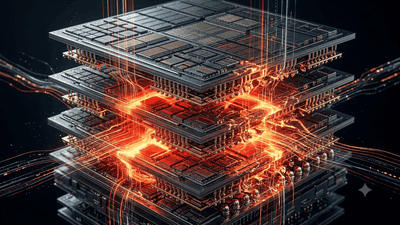
Thermal Simulation Challenges and Solutions in 3DIC AI Chip Design
As AI workloads push chips to deliver ever higher compute density, designers are increasingly turning to three‑dimensional integration (3DIC) to stack dies vertically and pack more functionality into limited footprints. While 3DIC architectures unlock significant performance and bandwidth advantages, they also introduce complex thermal behaviors that are far harder to predict and manage than in traditional 2D layouts.
An Attempt at Compiling a Memory+Compute Fusion Thematic Index – A Dual-Track Framework
Most AI investors talk about “compute” as if it were the whole story: GPUs, accelerators, chips, cores. But every one of those cores needs somewhere to read from and write to. Memory and storage define how wide the data highway really is. In practice, AI performance is a fusion of compute and memory, not a solo act. So why do so many indices and ETFs separate them into different silos—one for semiconductors, one for memory, one for data centers—when the actual workloads keep blending them?
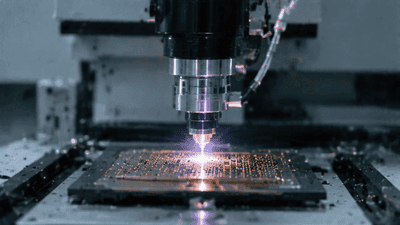
Surging Demand for Laser Drilling and Plasma Dicing Equipment in Advanced Packaging
Advanced packaging has become one of the semiconductor industry’s most important growth engines, and it is now pulling a surprising set of process tools into the spotlight. Among the most in-demand are laser drilling and plasma dicing equipment. These machines sit close to the heart of heterogeneous integration, fan-out packaging, wafer thinning, TSV formation, glass substrate processing, and other advanced flows where precision, yield, and throughput matter enormously. As packaging moves from a back-end afterthought to a strategic platform, the equipment used to shape, open, and separate materials has become just as important as the dies themselves.
D2D Interface Bandwidth and Latency Comparison in Chiplet Architectures
Chiplet architecture has turned the package into a real performance battleground. Once multiple dies are placed side by side or stacked within the same advanced package, the quality of the die-to-die, or D2D, interface becomes one of the most important determinants of system behavior. Bandwidth is no longer a nice-to-have metric, and latency is no longer a small implementation detail. Together, they shape whether a chiplet system feels nearly monolithic or frustratingly fragmented.

Stock Selection Logic and Alpha Validation of ESG-Themed Semi ETFs
Semiconductor themed ETFs are no longer just about growth and cycles. A growing subset now layers environmental, social, and governance (ESG) criteria on top of traditional sector exposure. These ESG semi ETFs promise two things at once: access to one of the market’s most powerful secular themes, and alignment with sustainability and governance standards. The pitch is appealing, but it raises two hard questions. First, how exactly are these stocks being selected? Second, does the ESG overlay help, hurt, or leave alpha unchanged?